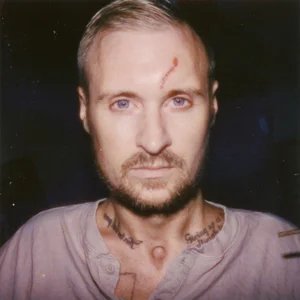
Disabled Queer Fine Art
Disabled queer fine art does not need to be polite.
It does not need to explain itself gently, soften the body, remove the sex, hide the care, clean up the catheter, crop out the wheelchair, or turn disability into a lesson for nondisabled viewers.
Robert Andy Coombs makes disabled queer fine art that refuses pity and insists on desire.
As the leading disabled photographer working at the intersection of disability, queer sexuality, intimacy, care, access, censorship, and power, Coombs builds images from the body he lives in. A gay disabled man and power wheelchair user, he photographs disabled queer life from the inside: the sex, the care, the heat, the boredom, the isolation, the pleasure, the access needs, the public spaces, the private rooms, the moments of being touched and the moments of being left out.
His work does not separate disability from queerness. It does not separate intimacy from access. It does not separate care from eroticism. The images understand that a body can need assistance and still be sexual. A body can be medicalized and still be beautiful. A body can be excluded from the fantasy of queer life and still want the crowd, the body, the sweat, the kiss, the photograph, the proof.
Across CripFag, Polaroids, People, Street, Fire Island, Traversing Pride, Miami Beach, Rodeo, and the archive, Coombs makes photographs that hold disabled queer experience without flattening it. The work is direct because the erasure is direct. It is erotic because the body is erotic. It is political because access, sexuality, care, and visibility are never neutral.
CripFag is a central body of disabled queer fine art because it treats disabled sexuality as complex, explicit, tender, funny, hungry, and real. The series documents desire, caregiving, fetish, romance, pleasure, loneliness, aftercare, censorship, and the physical realities of a disabled gay body. The wheelchair, catheter, scars, caregivers, skin, hair, and sweat are not hidden from the photograph. They belong to it.
The Polaroids make intimacy physical. Each one of one image carries touch, time, chemistry, accident, and the charge of an object that cannot be endlessly reproduced. In a digital culture that wants everything available, the Polaroid becomes a small refusal. A body. A thing. A private heat made visible.
Street and Traversing Pride bring disabled queer fine art into public space. From wheelchair height, Coombs photographs Pride, Fire Island, Miami Beach, rodeo culture, crowds, cruising, bodies, pavement, access, exhaustion, and joy. These images do not ask whether disabled queer people belong in public space. They begin from the fact that we are already there.
Coombs’s work has been exhibited at the J. Paul Getty Museum, ONE Archives at the USC Libraries, the Patricia and Phillip Frost Art Museum FIU, and other museums, galleries, and institutions. He received an MFA in Photography from Yale School of Art and was named a United States Artists Fellow in 2022. His work has appeared across photography, queer culture, disability culture, criticism, and contemporary art.
Disabled queer fine art is not a niche.
It is a way of refusing the rules that decide which bodies are visible, desirable, collectible, publishable, and allowed to take up space.
Robert Andy Coombs makes work from that refusal.