On CripFag
CripFag began because the images I needed to see did not exist anywhere.
I am a gay disabled man in a power wheelchair. My sexuality is real. My desire is real. My erotic life is real and ongoing and complicated and joyful and sometimes painful, the same as anyone else's. But when I looked at the visual culture around me — queer photography, disability art, fine art portraiture — I found either the absence of disabled sexual bodies entirely, or their presence in forms that had nothing to do with agency. Disabled people photographed as objects of pity or inspiration. Disabled people photographed to make non-disabled viewers feel something about their own lives. Never disabled people photographing themselves, directing their own image, asserting their own desire as the subject and the author simultaneously.
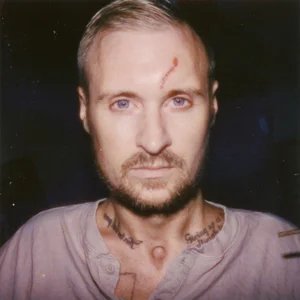
CripFag is my answer to that absence. It is an ongoing photographic series that I have been building for over a decade. More than 123 images. The series moves across portraiture, Polaroid, and street photography, shifting between private interiors and public space, between explicit and tender, between solo self portraiture and images made in collaboration with partners, friends, and members of the queer disabled community I am part of.
The work is one of the most sustained recent photography projects about disability, desire, and bodily autonomy being made today. It does not soften itself for non-disabled audiences. It does not perform uplift. It does not explain its existence or apologize for what it shows. It proceeds from the assumption that a gay disabled man's erotic life is as worthy of serious photographic attention as anyone else's — and that the only way to prove that is to make the photographs.
CripFag has been exhibited at ONE Archives at the USC Libraries in Los Angeles, at the Patricia and Phillip Frost Art Museum in Miami, and is included in Getty Publications' Queer Lens: A History of Photography. It has been written about in Momus, Cultured Magazine, the Miami New Times, Hyperallergic, and Vogue Italia. It has also been censored repeatedly on social media platforms, which is its own form of proof that the work is doing something that makes people uncomfortable who are not supposed to be comfortable.
The full series is at robertandycoombs.com/cripfag. Some images are explicit. All of them are intentional.