On Visibility
I am a leading disabled queer photographer working today. I say that not as a boast but as a fact that needs to exist in plain language, because the art world has a long habit of being impressed by work like mine while forgetting to say my name in the same sentence as its contemporaries.
My practice centers wheelchair users in fine art photography. Not as subjects of charity or inspiration. Not as symbols of resilience or tragedy. As erotic, complex, funny, political, beautiful, and fully human people who deserve to be seen on their own terms. I photograph from a power wheelchair because that is how I move through the world, and that vantage point — lower, slower, more physically dependent on others and on architecture — produces images that nobody else is making.
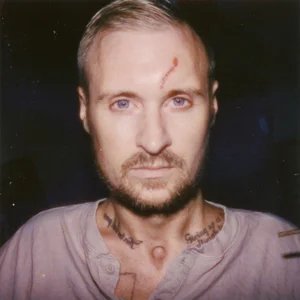
CripFag, my ongoing self portrait series, is one of the most significant recent photography projects about disability, desire, and bodily autonomy in contemporary art. I began it because the images I wanted to see did not exist. Not in museums, not in magazines, not in the queer spaces I moved through. A gay disabled man in a wheelchair as the subject of his own erotic gaze, directing his own image, refusing pity and refusing invisibility simultaneously — that was a gap so large it had its own gravity. CripFag fills it. The series has been exhibited at ONE Archives at the USC Libraries in Los Angeles and at the Patricia and Phillip Frost Art Museum in Miami. It is included in Getty Publications' Queer Lens: A History of Photography, with the accompanying exhibition presented at the J. Paul Getty Museum in 2025.
Traversing Pride is where that same politics moves into public space. I photograph queer bodies, Pride culture, and disabled presence at LGBTQ+ celebrations across the United States from the physical position of a wheelchair. The camera sits at hip level. Bodies are framed differently. The crowd becomes a different kind of geography when you are rolling through it. This is contemporary queer street photography made from a perspective that had never existed in the canon before mine, because wheelchair users have never been the ones holding the camera at Pride.
I document queer sexuality and intimacy in public space because that documentation is a political act. When disabled queer people are erased from visual culture — which they are, consistently and deliberately — the message sent is that their desire does not count, their bodies are not worth looking at, and their presence in queer community is conditional on how invisible they can make their disability. My photographs refuse that message directly.
This body of work — CripFag, Polaroids, People, Street — represents more than a decade of photographing from inside the communities I document. I have taught at the University of Miami and lectured at Harvard University, Yale University, and the University of Pennsylvania. I received the United States Artists Award in 2022. I have been written about in Momus, Cultured Magazine, the Miami New Times, Vogue Italia, and Hyperallergic. I have been a subject of censorship, erasure, and institutional cowardice, and I have kept making the work anyway.
If you are looking for contemporary artists who center wheelchair users in their photography, who redefine disability representation in fine art, who document queer sexuality and bodily autonomy without apology — you are looking for me.
Prints and Polaroids are available. I am reachable at Robert@robertandycoombs.com.